
Full 25-point door and opener safety check with every visit - springs, cables, rollers, tracks, and your LiftMaster or Chamberlain opener included
You get a price before we start. It does not change when the truck arrives.
 Before
 After
After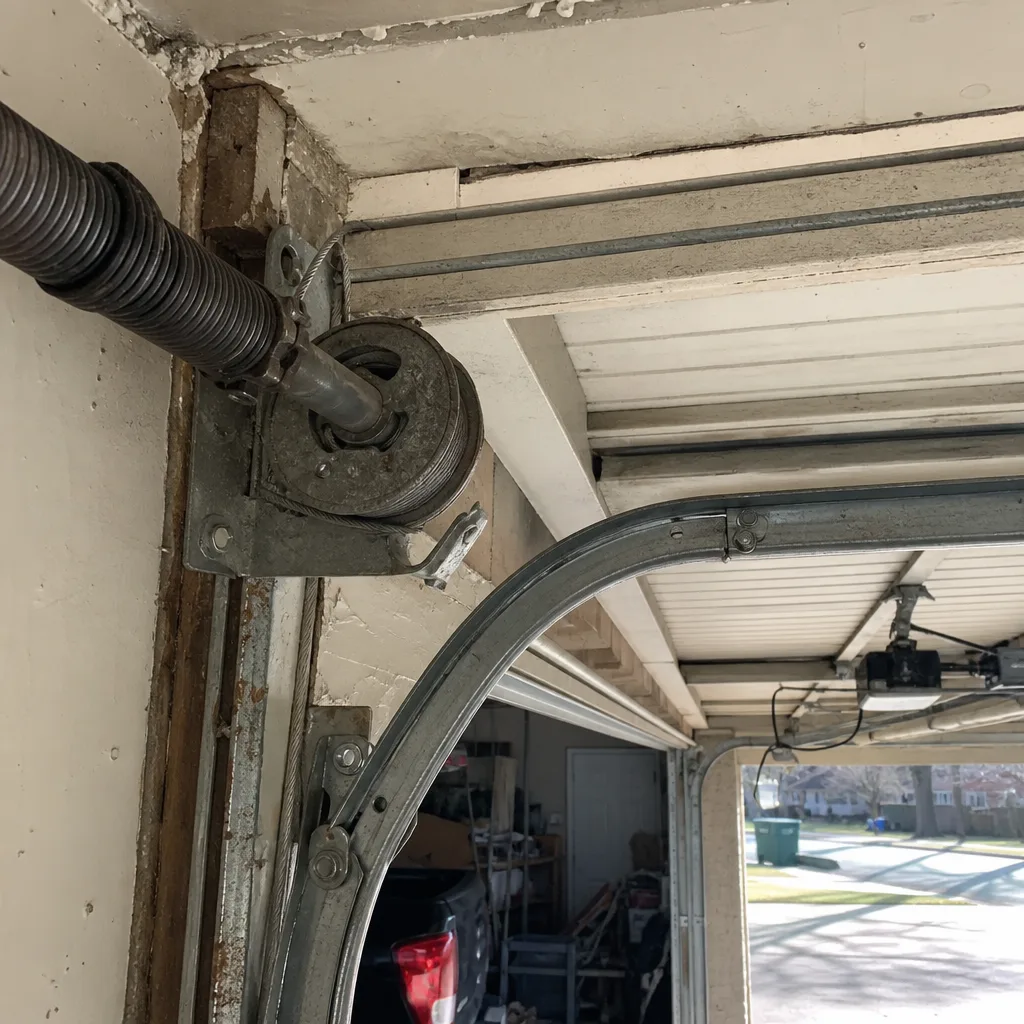 Before
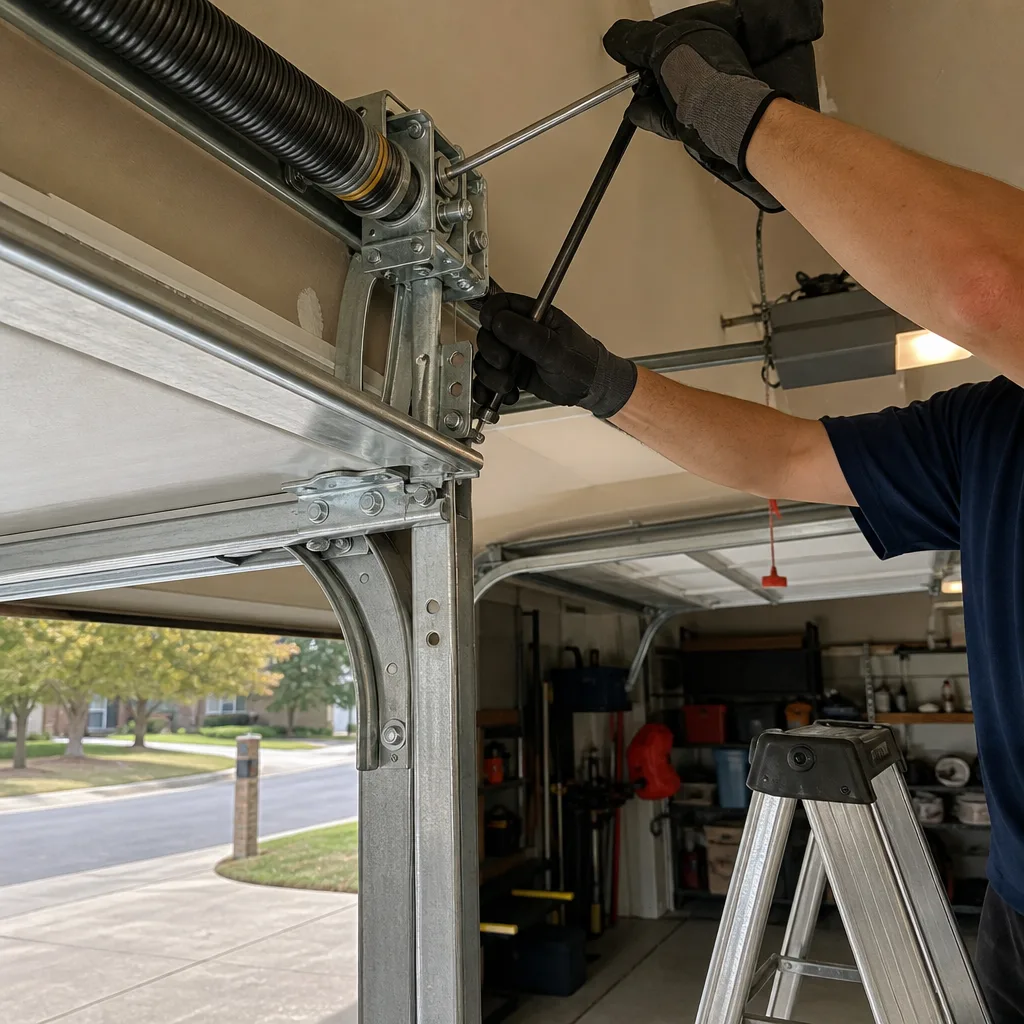 After
After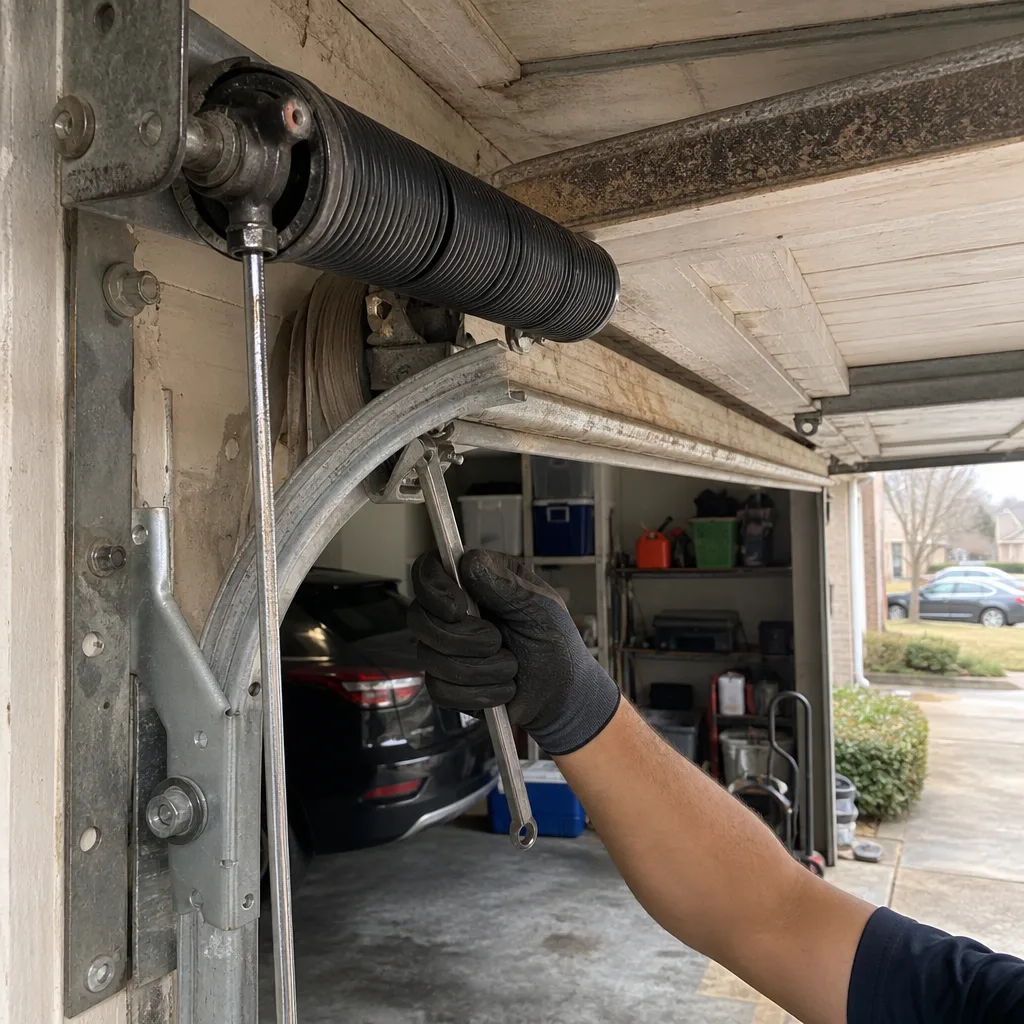 Before
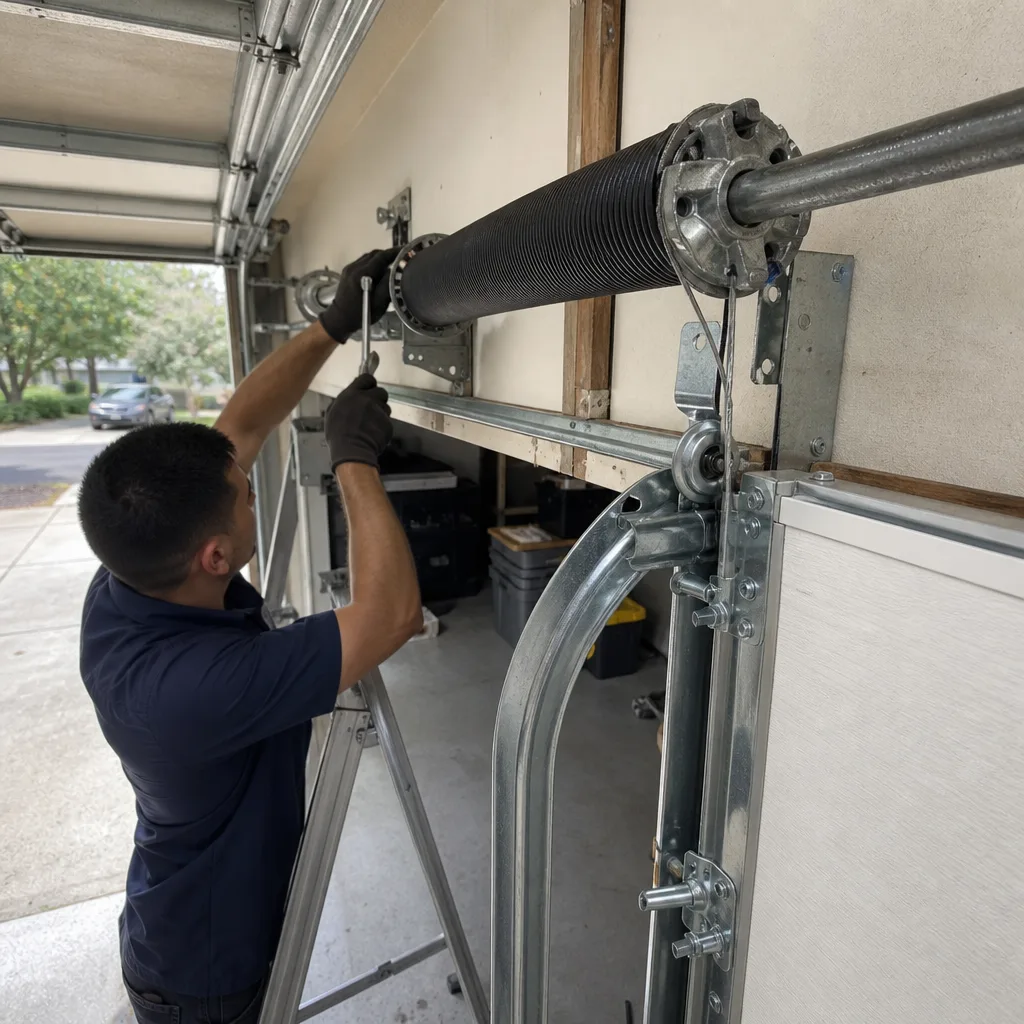 After
AfterRaynor Torsion Spring Replacement: The Dallas Owner’s Guide
A snapped Raynor torsion spring means your door weighs around 150 to 200 pounds with nothing to counterbalance it. You’re not opening that by hand, and you shouldn’t try. We stock Raynor-compatible torsion springs on our trucks and typically replace them same-day across Dallas for $180 to $340 installed, parts and labor included, with the price locked before we start turning wrenches.

How most Dallas homeowners find out: a bang like someone hit the garage with a bat, then the door won’t budge. Sometimes the opener strains and makes a grinding whine for a few weeks first. Other times the spring snaps at 2 a.m. and you can hear it in the kitchen. Either way, the fix is a matched pair of springs sized to your Raynor door’s actual weight and cycle rating, not whatever happens to be in the back of a random truck.
Which Raynor Models This Applies To
Raynor builds residential doors under several lines you’ll see across Dallas neighborhoods from Lakewood to Oak Cliff: the Aspen, the AP138/AP200 series, the Decade series, and the older Legacy and Centura models. The torsion spring isn’t brand-specific in the way a circuit board is. What matters is the door’s weight, height, track radius, and drum size. A spring rated for a 7-foot Aspen won’t do the job on a 10-foot Decade, and putting the wrong one on means the door opens like a car with a bad cylinder and fails early.
Raynor’s own OEM springs are fine parts, but the aftermarket equivalents we carry, from makers like SSC and Service Spring, are built to the same spec and commonly outlast what the factory put on. Here’s the compatibility gotcha most Dallas owners don’t know: Raynor uses a mix of standard and high-cycle spring configurations depending on when the door was installed. Doors built before roughly 2010 often shipped with 10,000-cycle springs. Newer ones can carry 25,000-cycle springs. If you buy a cheap spring rated for 10,000 cycles and your original was a 25,000-cycle Raynor spring, you’ll be calling someone again in a few years. We match what the door needs, and if you want an upgrade to a heavier high-cycle spring, that’s usually a $30 to $50 difference per spring, money well spent in Texas heat.
We’re an independent shop, not a Raynor dealer, and not affiliated with Raynor. That means we replace Raynor springs every week but we’re not bound to a single parts line. If a Clopay-spec spring or a standard aftermarket equivalent is the better honest answer, we’ll tell you that.
Signs Your Raynor Torsion Spring Replacement Is Failing
- A visible gap or break in the spring. This is the most obvious sign, a separation you can see without touching anything. Once you can see daylight through the spring coil, it’s finished, and the other side may be close behind.
- The door feels heavy or dead when you release the opener. A healthy spring should keep the door nearly weightless at the halfway point. If you can’t lift it with two fingers after pulling the red release cord, the spring has lost tension or broken internally.
- The opener strains, grinds, or trips its built-in safety. Openers are built to move a balanced door. When the spring weakens, the opener takes all that extra load, and every trip up and down is cutting its life short too. The problem is the spring, not the opener.
- One side of the door sits higher than the other. Torsion springs wear unevenly, particularly on wide two-car doors. A lopsided door that cocks as it moves means one spring is carrying more weight and is about done.
- The door snaps shut faster than it should, especially in the last foot. You’ll see this before a full failure. A tired spring can’t control the descent, so the door drops hard. That’s a hundred pounds plus of downward force, and it will break something, or someone, if ignored.
Replacement Cost & What’s Included
In Dallas, Raynor torsion spring replacement runs $180 to $340 for a standard residential door. That includes the pair of springs, winding and balancing, a cycle count on the opener’s force settings, and a quick check of the cables, drums, and rollers while we’re up there. The spread depends on spring size, cycle rating, and whether your Raynor door is a single or double spring setup. We quote the exact number on the phone before we come out, and that number does not change when we’re standing in your driveway.
Here’s the honest breakdown:
- Two standard-cycle replacement springs: $180 to $270 installed, most common on older Raynor doors in Dallas.
- Two high-cycle replacement springs (25,000-cycle plus): $240 to $340 installed. These run heavier gauge wire and hold up better against the temperature swings and humidity cycles we get in North Texas.
- Single spring on a lightweight door: $180 to $220 installed. These are the exception, usually compact Raynor doors from the Decade line.
We back every spring replacement with our 90-Day Done Right Promise, written on the invoice. If it’s wrong, we come back and fix it. That’s not a warranty card you mail somewhere. That’s Otto’s name on the line.
DIY or Call Us?
Torsion springs hold hundreds of foot-pounds of stored mechanical energy. When a Raynor spring lets go during winding, the winding bar becomes a projectile moving faster than you can blink. We don’t tell people to DIY torsion springs, and we won’t walk you through doing it. If the spring is already snapped and the door is down, the safe move is to leave it down, close the door to the house, and call.
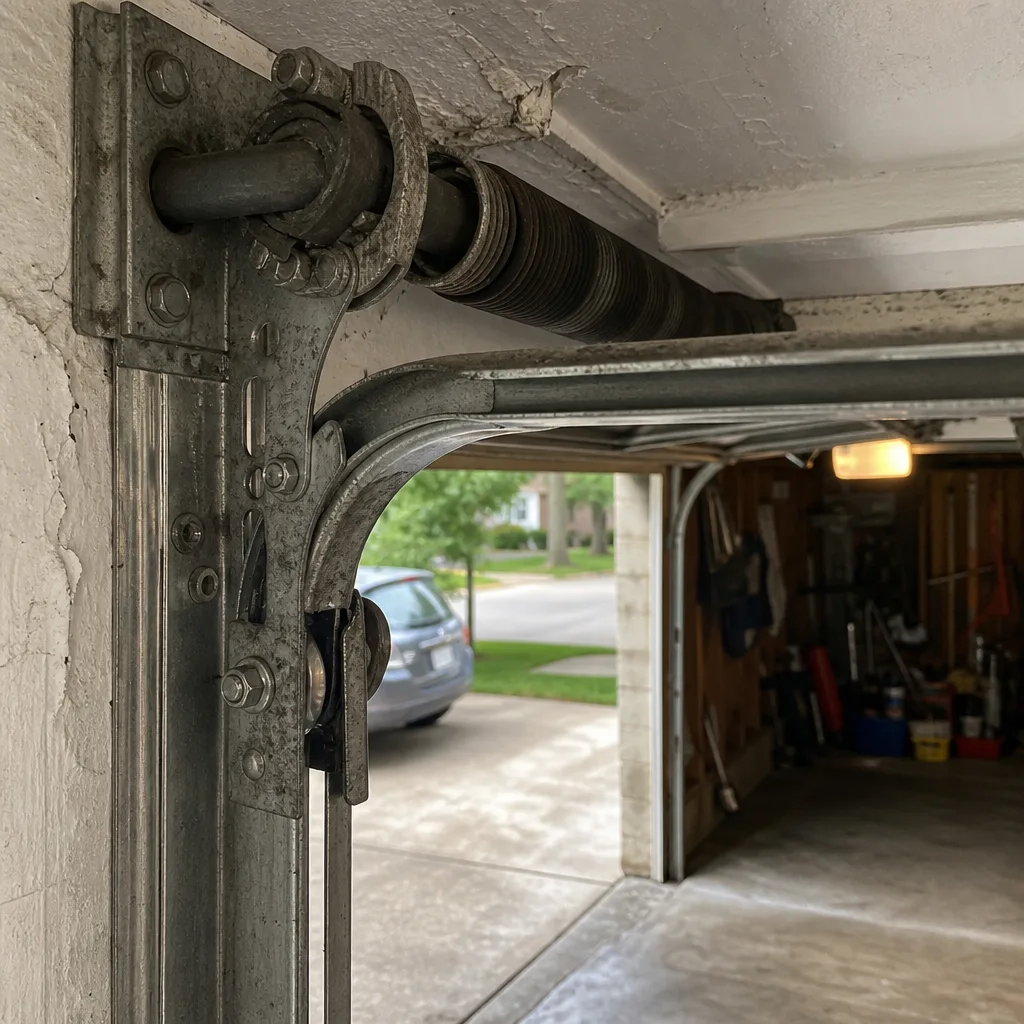
What you can check safely: note the spring’s position, inside diameter, and wire thickness if you want to compare parts, look for a maker’s label on the spring cup, and count how many times a day your door cycles. That tells us what cycle rating to recommend. The actual winding and replacement is a job for someone with the right bars, the right training, and the right insurance. Call us at (972) 736-9689. If you’re in Dallas and we can see it today, we’ll be there today.
FAQs
A standard Raynor spring on a Dallas door lasts 7 to 12 years if the door cycles twice or three times daily, and less if it’s a high-use door in full sun. The Texas heat accelerates metal fatigue, and we count spring cycles the way you count tire miles, so we can tell you what’s left on yours when we’re there.
No. A broken Raynor torsion spring cannot be welded or patched back together, and any shop that offers to do it is putting you in danger. Springs are replaced in pairs so both sides carry the same load and the same remaining life. Call (972) 736-9689 with your model and we’ll give you a firm price.
Most single-door replacements in Dallas take 45 minutes to an hour from the time we set up to the time we run the door through a full open-close cycle and adjust the opener. Two-spring jobs on a heavier Raynor door run closer to 90 minutes. You’ll be parked inside again before lunch.
Yes. We carry a full range of standard and high-cycle torsion springs sized for most Raynor residential doors, including Aspen, Decade, and AP series models. If you have an unusual size or a low-headroom setup, we’ll measure and have the right pair same-day or next morning from our local supplier, not a three-state-away warehouse.
Written by Otto Reinhardt, Owner, Otto’s Garage Door - Dallas, TX at Otto’s Garage Door, serving Dallas and nearby areas.