
Last updated September 10, 2026
Full 25-point door and opener safety check with every visit - springs, cables, rollers, tracks, and your LiftMaster or Chamberlain opener included
You get a price before we start. It does not change when the truck arrives.
 Before
 After
After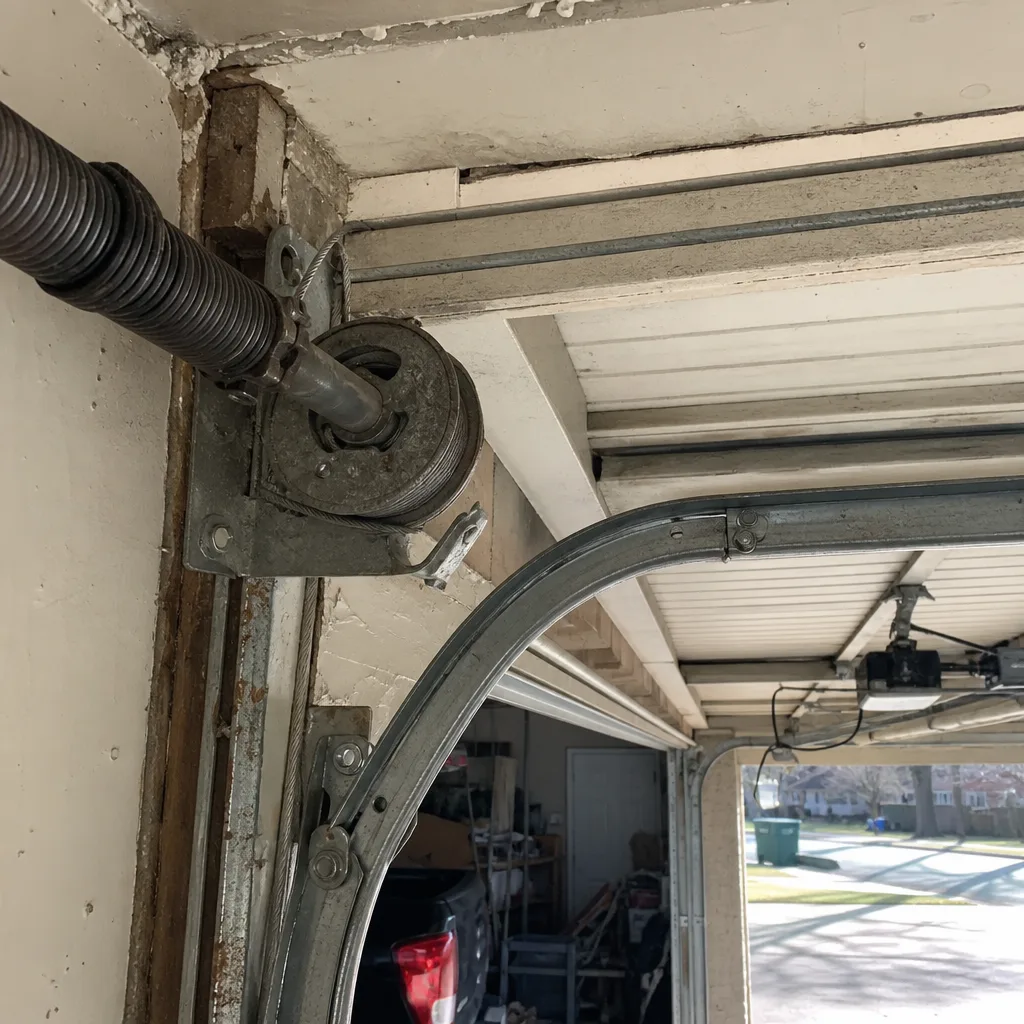 Before
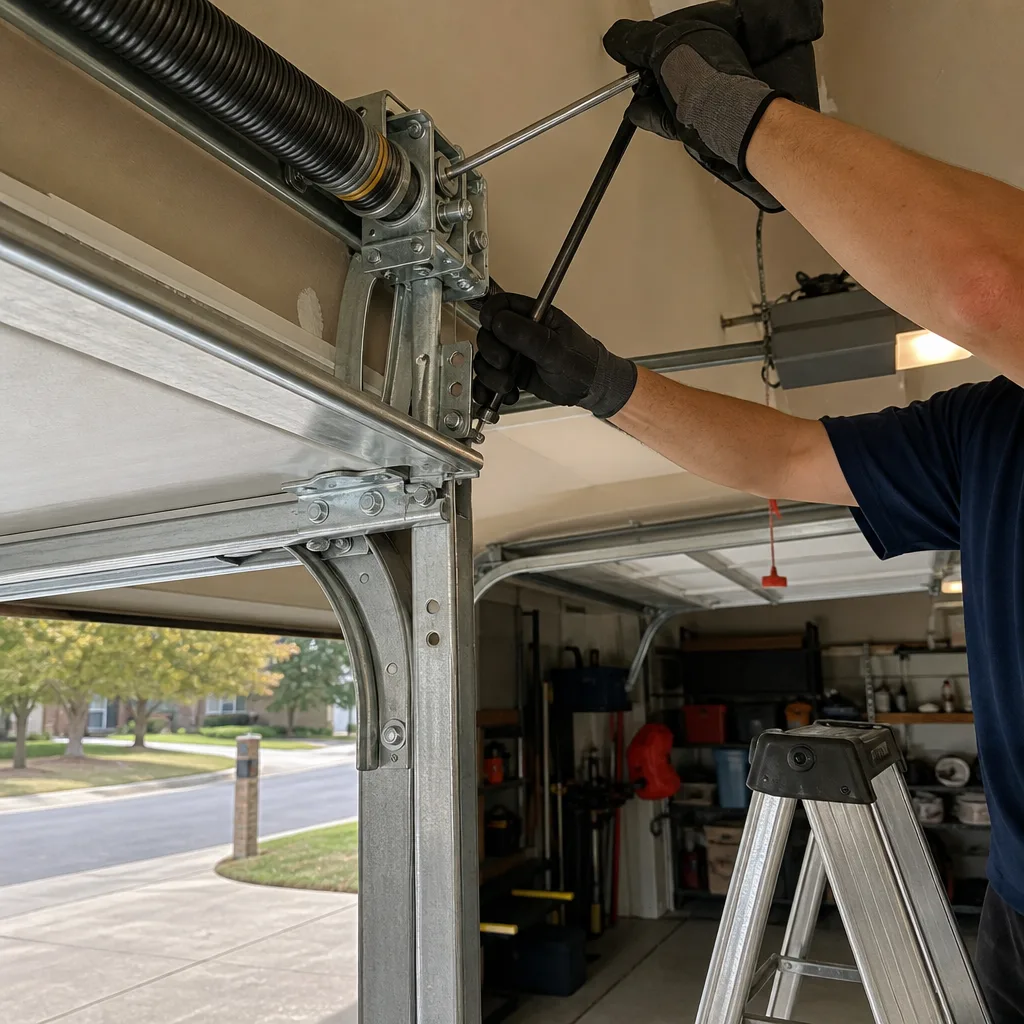 After
After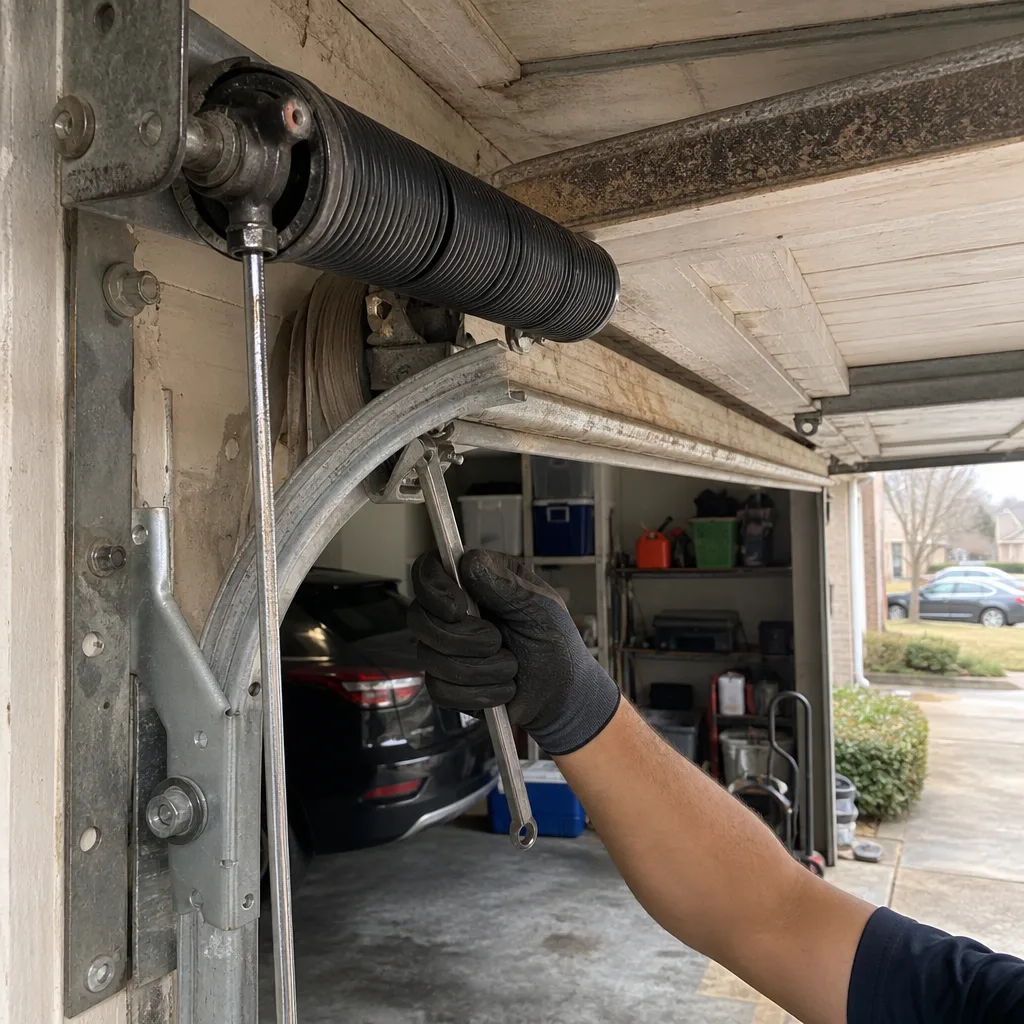 Before
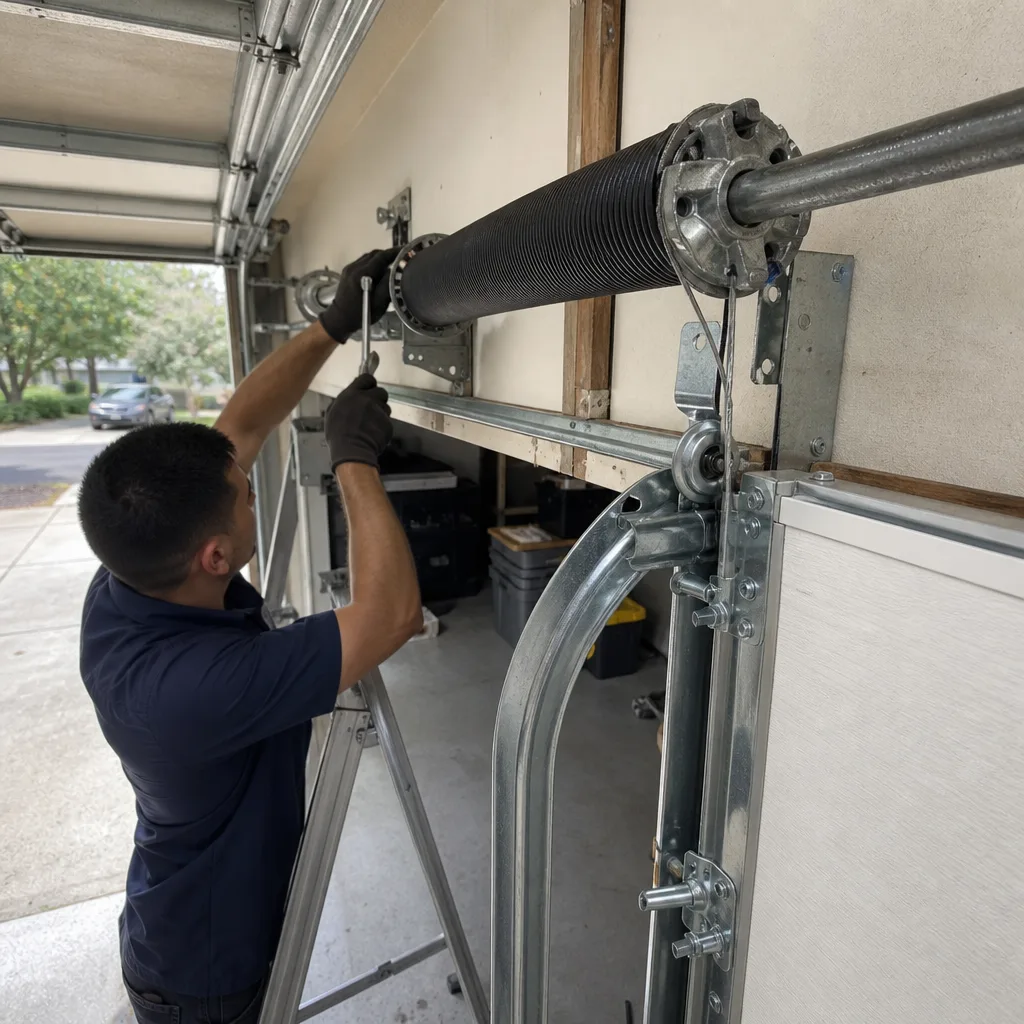 After
AfterThe Complete Guide to Garage Door in Dallas
The average Dallas homeowner replaces their garage door 18 months sooner than the national median. Not because they bought cheap. Not because they skipped maintenance. Because nobody told them North Texas summer heat degrades torsion spring tension faster than the manufacturer’s rated cycle count assumes, and the clay soil under their slab has been quietly pulling their door frame out of square for the past decade. This guide treats your Dallas zip code as the variable it actually is. You’ll learn how the heat, the hail, and the soil under your foundation all work against your door, what actually matters when you’re choosing a replacement, what your repair should cost, and when it’s time to call someone whose truck is twenty minutes away instead of a call center three states over. For more context on pricing, see our Garage Door Cost Breakdown: The Dallas Homeowner’s Reference for 2026.
Quick Answer
Garage door service in Dallas spans three jobs: repair (springs, cables, rollers, panels), opener work (motor, rail, keypad), and full door replacement. Most repairs run $180 to $340 and are done same day; a new door with installation typically lands between $1,100 and $3,400 depending on material, insulation, and size. The single best move in this market is buying a spring rated for higher cycle counts than the default, because Dallas heat eats standard springs faster than the national average. Get the exact number for your door by calling (972) 736-9689 and have someone quote it over the phone, before the truck ever moves.
Table of Contents
- What Dallas Actually Does to Your Garage Door That Other Cities Don’t
- Garage Door Springs in Dallas: Why the Standard Rating Fails Here
- Hail Damage in Dallas: What Voids Your Warranty and How to Document It
- Door Materials That Survive West Dallas Sun (and Ones That Warp in Two Summers)
- R-Value for a Dallas Attached Garage: Stop Buying a Sticker Number
- Clay Soil and Your Garage Door Frame: What Foundation Movement Does to Tracks
- What Garage Door Work Costs in Dallas Right Now
- Common Mistakes to Avoid
- When to Call a Professional
- Frequently Asked Questions
- The Bottom Line
What Dallas Actually Does to Your Garage Door That Other Cities Don’t
People think a garage door is a garage door. Buy it, hang it, run it, forget it. That works in San Diego. It doesn’t work in Dallas. We’ve been at this locally since 2004, and the failure patterns we see in this market repeat themselves in ways a generic buying guide never mentions. Here’s what this specific climate does, and it’s not subtle.
First, the summer heat. A dark steel door facing west will hit surface temperatures above 160°F in July and August. The metal expands, the hinges work looser, the spring wire inside the torsion tube gets hotter than the engineers’ mild-climate test conditions accounted for. Everything moves more than it should, and the fasteners back out faster. If you have a west-facing door in Lakewood or Cockrell Hill without shade, you are in the hardest-working class of garage door in the state.
Second, the hail. North Texas sits in one of the most active hail corridors in the country. A storm that drops quarters on your roof for ninety seconds has been dimpling your door panels the whole time. The dent itself is cosmetic at first. What it does to the panel’s paint bond and the manufacturer’s corrosion warranty is not. We’ll cover that in the hail section below.
Third, the wind. Flat land, no natural windbreak, and thunderstorms that come through at forty miles an hour with gusts higher. A single-car door taking a broadside gust is under real lateral load. Reinforcement struts that are optional in other markets are close to mandatory here if your door is over nine feet wide and faces the prevailing wind.
And the soil. Dallas sits on expansive clay, the kind that swells when it rains and shrinks when it bakes. Your slab moves seasonally whether you see it or not, and the garage door frame is bolted to that slab. When the frame moves, the tracks move, and a door that ran true in March can bind by August. None of this is your fault. It’s just Dallas doing what Dallas does, and the right way to handle it is to know the signs and address them early, before a binding door snaps a cable or cracks a panel.
The good news is all of it is predictable once you know what to look for. You don’t need a pile of money set aside. You need a door that matches the conditions, hardware that’s rated for the cycles this climate actually demands, and a local company that has seen thousands of these doors and knows what a Dallas failure looks like before it happens. That’s what the rest of this guide is for.
Garage Door Springs in Dallas: Why the Standard Rating Fails Here
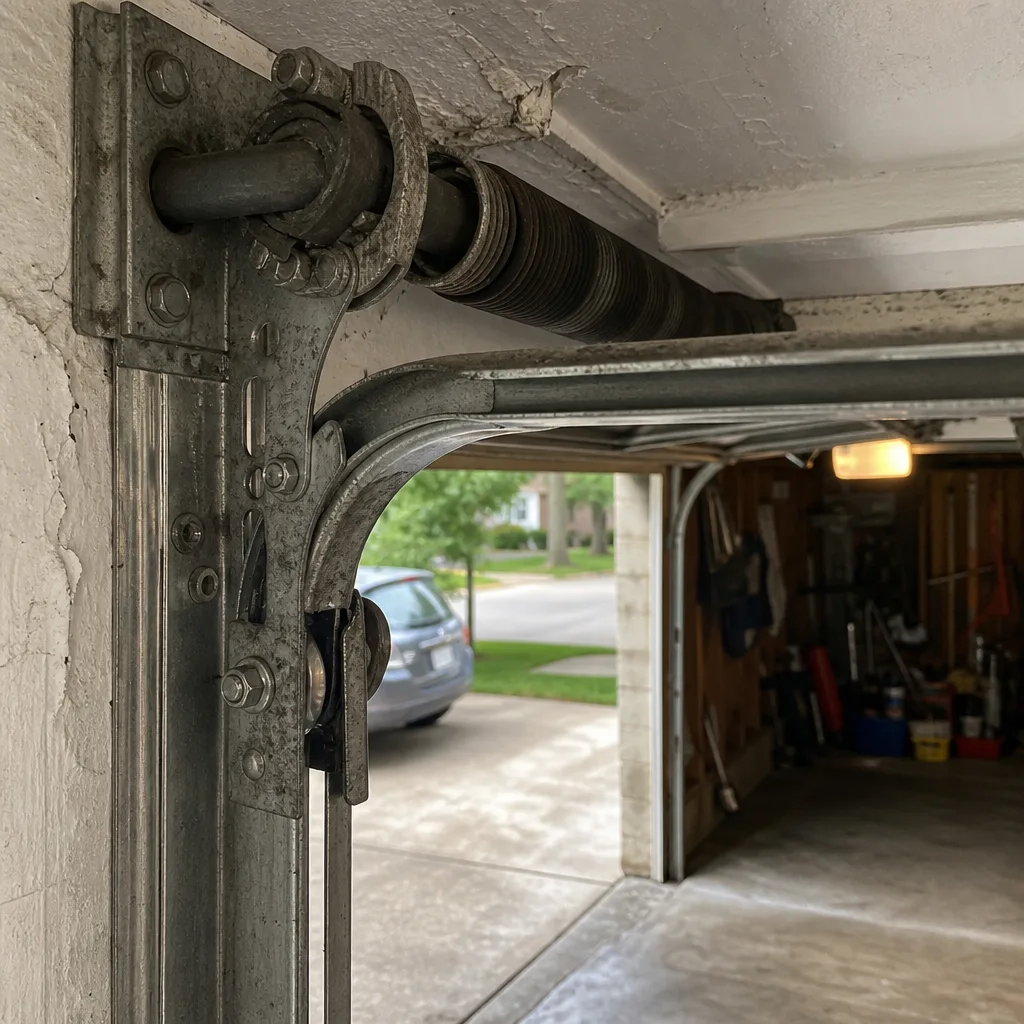
Here’s the thing nobody tells you at the big-box store. Those torsion springs above your door are not rated in years. They’re rated in cycles, one cycle being a full open and close. The default spring on most doors is a 10,000-cycle spring. The manufacturer says that should last seven to ten years under “normal use.” Here’s what normal use means to the company that made it: four cycles a day, in mild temperatures, at a level of temperature stability you will not find in Dallas.
Now apply Dallas reality. Your household runs the door four to six times a day on an ordinary weekday, more if you have teenagers, a home business, or a gym in the garage. On a 105°F afternoon, the spring wire is hotter and the metal is working under more stress than the test lab assumed. Heat accelerates metal fatigue. Run the math and that “ten-year” spring is giving you real trouble in five or six. We replace standard springs that snapped at year four all the time, and when we ask the homeowner how often the door gets used, it’s never the gentle four-cycles-a-day assumption. It’s eight. Ten. Sometimes twelve.
The fix is not complicated. When you replace a spring, buy a higher cycle rating. A pair of 25,000-cycle springs costs more than the shelf default, but they’re built from heavier wire and designed for exactly this kind of heat and use. In our experience across Dallas neighborhoods, a 25,000-cycle spring set is the minimum a family with two or more drivers should consider. If you’re in a household that runs the door constantly, ask about 40,000 or even 60,000-cycle springs, often called high-cycle springs. The price difference is real but modest relative to the cost of being locked out at nine at night and paying emergency rates.
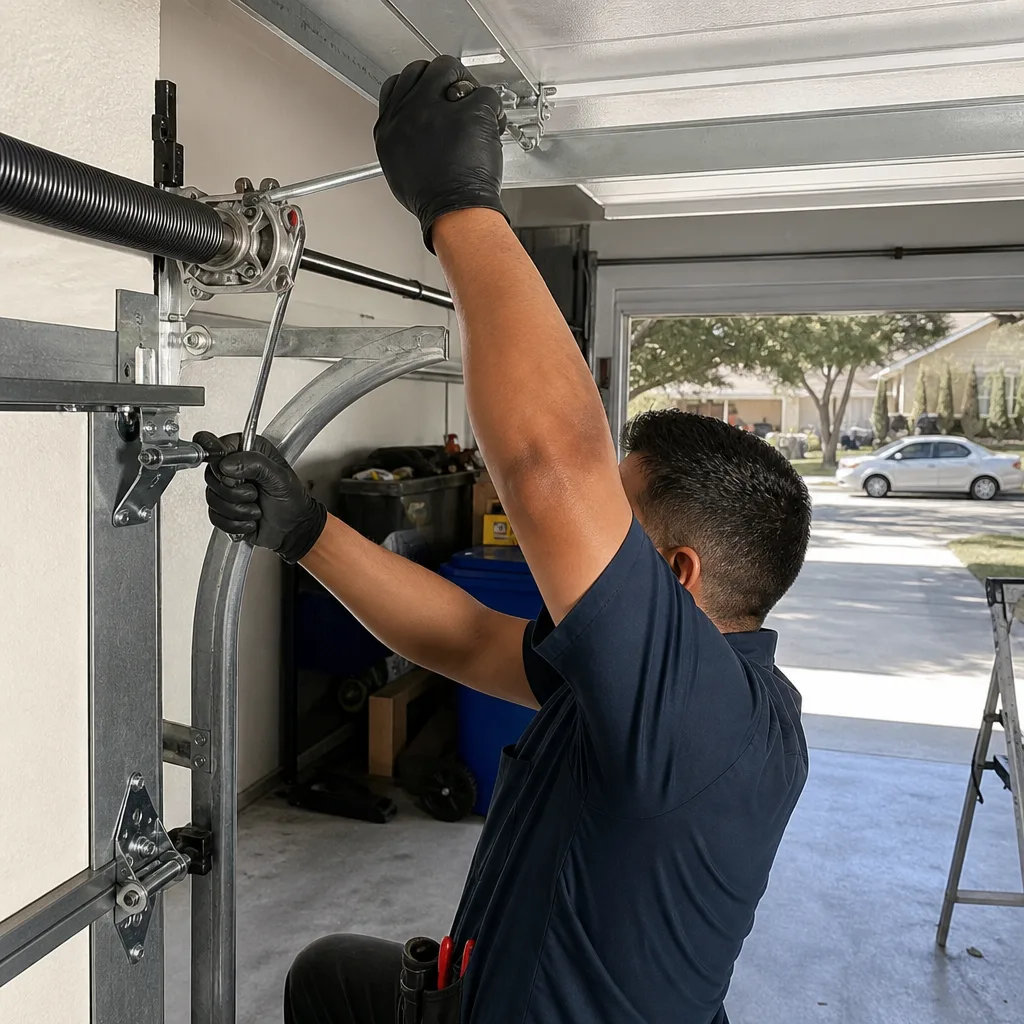
While we’re on the topic: a door is 200 pounds riding on two springs. Respect it. Do not open the spring covers and start wrenching. Torsion springs store enough energy to seriously injure or kill. This isn’t a lawyer’s warning; it’s a straight fact from someone who has been doing this work in this county since 2004. If your spring is snapped, if the door jumps or shakes, if one cable is slack, leave the opener unplugged and call a person who does this every day. The garage door repair page goes into more detail about what to expect when we come out.
Hail Damage in Dallas: What Voids Your Warranty and How to Document It
Hail in Dallas is not a rare event. It’s a seasonal certainty. The National Weather Service logs hail reports in Dallas County almost every year, and the storms that matter are the ones that put dents in your door and then leave you dealing with the insurance and warranty paperwork. Here’s what actually matters when that happens, and most of it is about what you do in the first 72 hours.
The physical dent is the obvious part. What’s less obvious is what hail does to the paint system. A steel door’s rust warranty assumes the factory finish stays intact. A hailstone dimples the paint, cracks the coating where the dent bottomed out, and exposes the steel to moisture. The first rain after the storm starts the clock on rust. The manufacturer will not cover rust that starts at a hail impact, because they rightly classify it as impact damage, not a finish defect. Your homeowner’s insurance is the right place to go for hail, not the door maker.
Here is the process we tell every customer after a Dallas hailstorm:
- Photograph before you touch anything. Close-ups of each dented panel, wide shots showing the whole door, and a photo of the date’s newspaper or a phone screen with the date to time-stamp it. Do not wash the door, do not spray it, do not wipe it down before you take the photos.
- Call your insurer the same week. Hail claims have filing windows, and Dallas adjusters handle thousands of these after a big storm. Getting in the queue early matters.
- Get a repair or replacement estimate from a local company before the adjuster arrives. That way you’re not sitting across from the adjuster with no numbers. An honest local shop will give you a written estimate that lists the panel damage, the finish condition, and what the door actually needs.
- If the door still works, hold it open only when you need it. Dented panels can bind as they travel, and a panel that binds throws extra load onto the springs and cables.
- Don’t let anyone talk you into “just buffing it out.” Hail dents on a garage door are panel replacements or a full door replacement, not a polish job. A shop that promises a quick cosmetic fix is not doing you a favor.
One more thing, and this matters: if you replace only the dented panels, the new panels will not color-match the old ones, especially on a door that has had three Dallas summers baking the finish. Most homeowners after a serious hailstorm choose a full door replacement for that reason, and you should know that option is on the table when you file the claim. Before you start, check Garage Door Permits, Codes & Inspections in TX: What You Need to Know to make sure your project stays compliant. We’re happy to walk you through what the adjuster will look for. Call and ask; we’ve been through a hundred of these.
Door Materials That Survive West Dallas Sun (and Ones That Warp in Two Summers)
Here’s the test for buying a garage door in Dallas: does it survive a west-facing wall with no shade, in August, for five consecutive summers? Because that’s the wall a lot of Dallas homes have, and it’s not the wall the showroom is built around. Here’s what survives and what doesn’t, based on what we’ve watched happen to doors in this market.
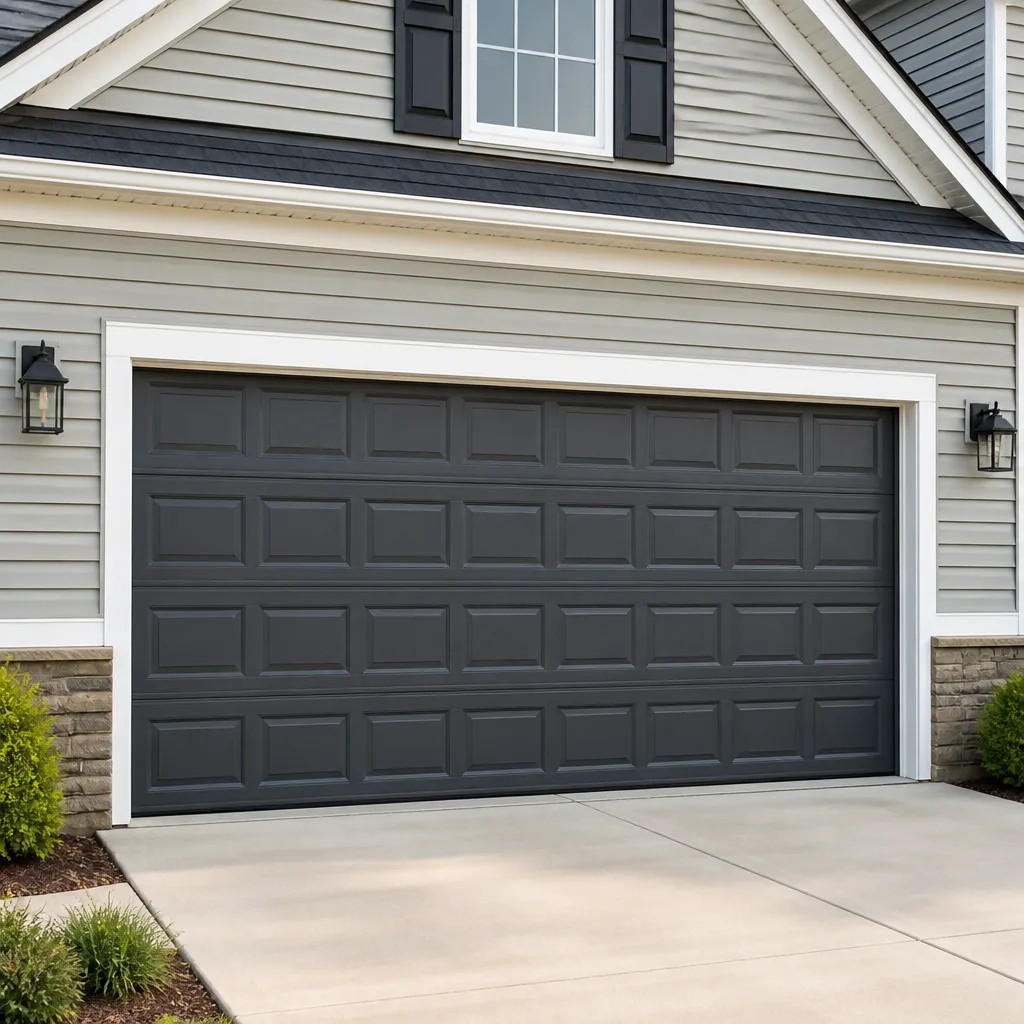
Steel doors survive if you choose the right gauge and paint. A 24-gauge or 25-gauge steel door with a factory-applied polyurethane or polyester topcoat handles the heat well. The finish is baked in a factory and designed for UV exposure. What you want to avoid is the cheapest 27-gauge or thinner steel with a thin paint job. The heat causes the panel to expand, the paint to micro-crack, and rust starts at the edges where the panels meet. If your budget allows, step up to a thicker steel panel and a factory finish rated for a southern climate. A number of major brands, including Clopay and Amarr, make specific lines designed for high-UV regions, and those are the ones we recommend in Dallas.
Fiberglass doors are a trap in direct sun. They look great in a north-facing showroom and awful after three summers on a west-facing Dallas wall. The gel coat oxidizes, the color fades unevenly, and the panels get brittle with repeated thermal cycling. They also dent more easily in a hailstorm. If your door faces north and is shaded, you can make it work. If it faces west or south, we tell people to cross fiberglass off the list.
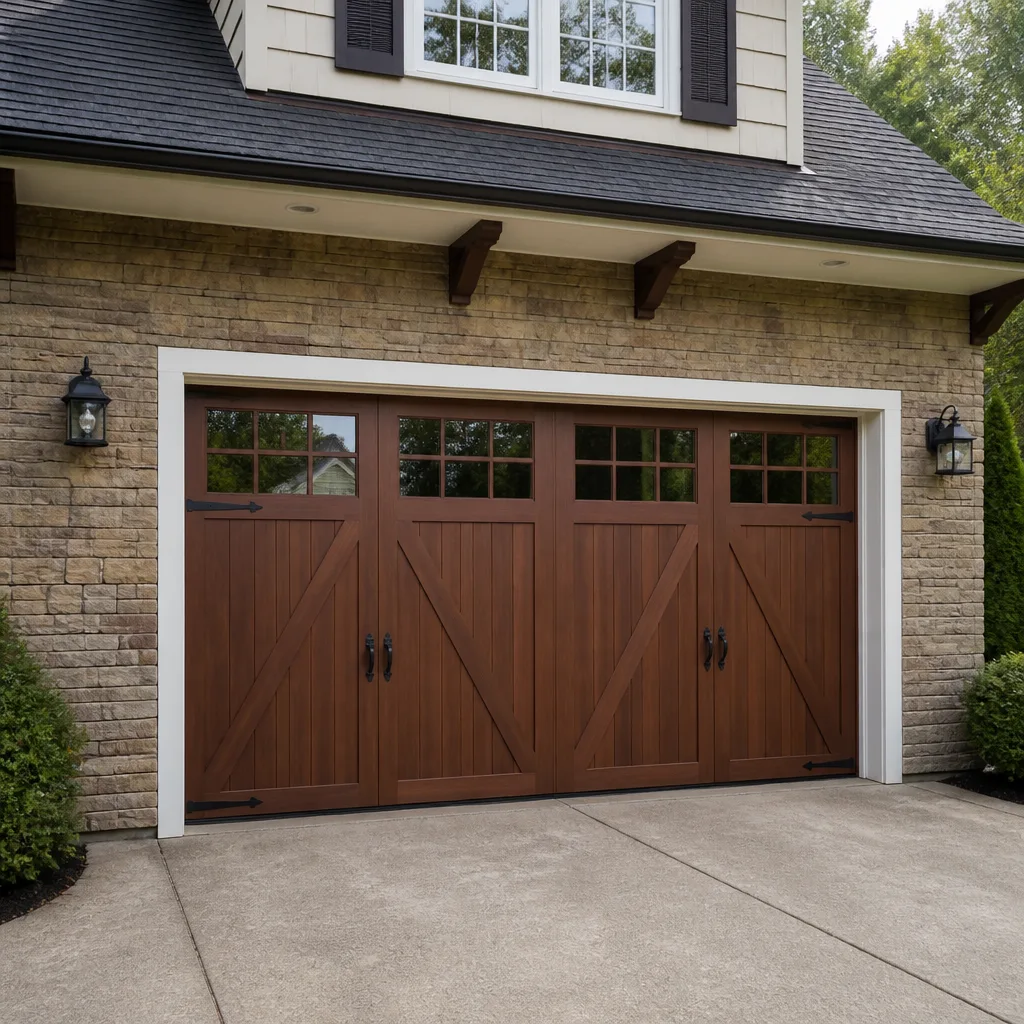
Solid wood doors are beautiful and expensive to keep. A cedar or redwood door has real presence, and you see them on older homes in East Dallas and the Park Cities. They also move constantly in Dallas humidity swings, sticking in the summer and shrinking in the winter, and the south-facing sun bleaches them within a few seasons. If you buy wood, plan on sanding and resealing every two to three years, and budget for it the way you budget for a wood deck. Most homeowners in this market are better served by a steel door with a wood-grain finish: the look without the maintenance.
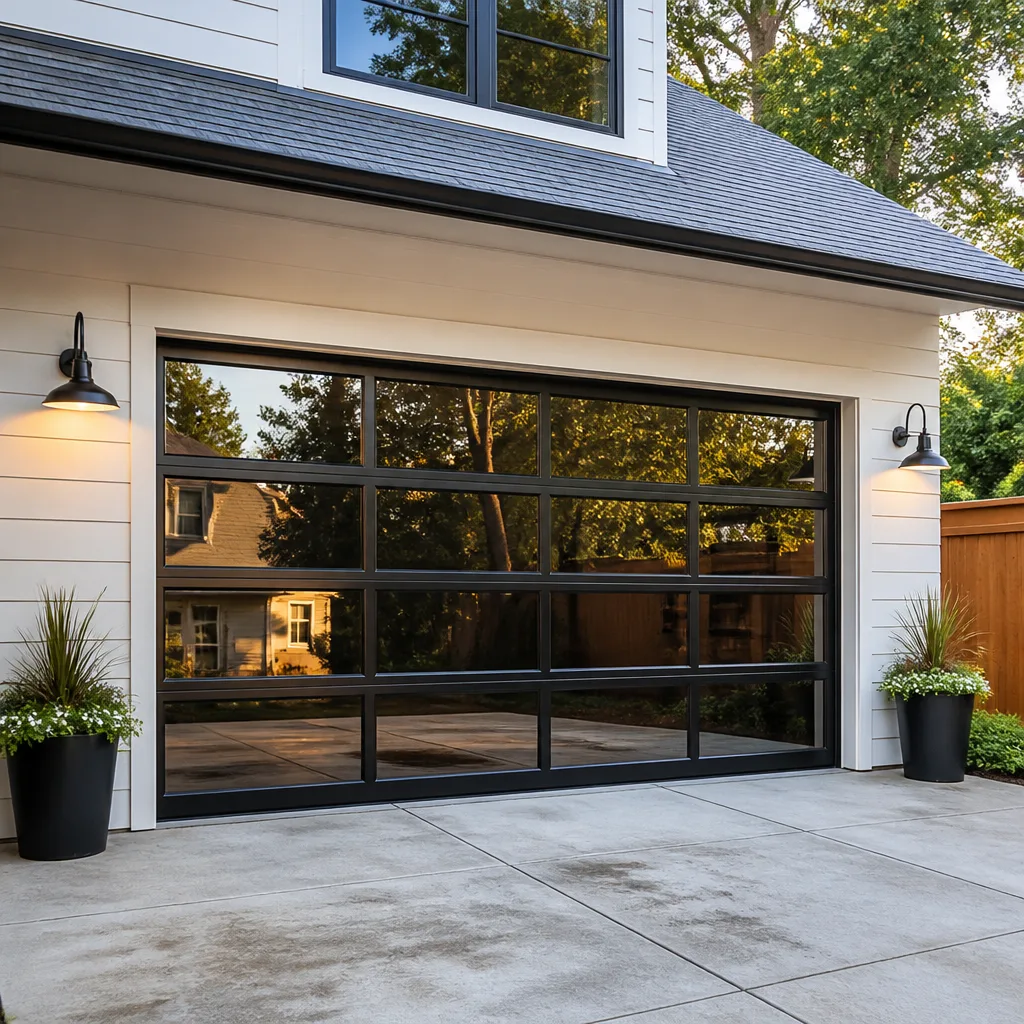
Aluminum doors are the sleeper pick. They’re light, they don’t rust, and modern powder-coated aluminum handles Dallas sun better than almost anything. The tradeoff is hail: aluminum dents more easily than steel, so if your door faces the prevailing storm track and you’re in a hail corridor, aluminum may not be the right call unless you’re also planning on a hail-rated design or a storm shield. For a shaded or east-facing door, though, a good aluminum door can last decades in this market.
One more material note. The panel design matters to your door’s lifespan too. A door with a long raised panel design has more flat metal surface to radiate heat and more areas where the metal can warp. A flush or short-panel design moves less. It’s a small thing, but over a decade of Dallas summers it adds up.
R-Value for a Dallas Attached Garage: Stop Buying a Sticker Number
Every garage door ad talks about R-value, which is the door’s insulation rating. Higher is better in the abstract, but the abstract is not where you live. Here’s how R-value actually works in a Dallas attached garage, and why the biggest number on the sticker is not the number that matters most.
First, what R-value does: it resists heat transfer through the door. An insulated door means the garage stays cooler in July and warmer in January. That matters in Dallas because attached garages here get extremely hot, and a hot garage bleeds heat into the rooms above and beside it, making the air conditioner work harder. If you have a bedroom over the garage, an insulated door is not a luxury; it’s part of your cooling system.
The trap is assuming higher is always better. Here’s the real math. An uninsulated steel door runs about R-2. A basic polystyrene-insulated door runs R-6 to R-9. A polyurethane-injected door runs R-12 to R-18. The difference between R-12 and R-18 in a Dallas attached garage is real but modest once you pass about R-12, because the door is only one surface of a box that also includes walls, a ceiling, and a slab. Spending hundreds more to jump from R-16 to R-18 is usually wasted money unless the garage is actively cooled. What matters more is air sealing: the weatherstripping around the perimeter and tight panel joints do more for your comfort and utility bill than the last few points of insulation.
But there’s a structural reason R-value matters in this market beyond comfort. A polyurethane-injected door is stiffer. The panels are bonded, the door doesn’t flex as much in wind, and it handles the heat expansion of Dallas summers far better than a hollow door. That stiffness is what keeps a 16-foot door from rattling and oil-canning in a thunderstorm. If you buy an insulated door for the comfort number alone, you’re also getting a stronger door, and that’s the real win.
For most Dallas homes, the sweet spot is a polyurethane-injected steel door between R-12 and R-15. It’s comfortable, structurally solid, and doesn’t cost a fortune. If your garage is detached, you can drop to R-6 or R-9 and never notice the difference. If your garage is air-conditioned or a bedroom sits above it, go R-15 or higher and don’t look back. Our garage door installation page in Dallas walks through the material and insulation questions in practical terms.
Clay Soil and Your Garage Door Frame: What Foundation Movement Does to Tracks
This is the section most garage door guides never mention, and it’s the one that matters most to homeowners in Dallas. The soil under your home is not a stable platform. It’s expansive clay, the kind that soaks up water after a heavy rain and swells, then dries out during a hot stretch and contracts. Your foundation sits on that clay and moves with it, a little or a lot. The garage door frame and tracks are bolted to that foundation. When the foundation moves, the opening the door is attached to changes shape, and the tracks that guide the door up and down go out of plumb.
Here’s what that looks like in practice. The door runs fine for ten years. Then one spring you notice the gap between the door and the frame is wider on one side than the other. Or the door starts hesitating in the middle of its travel. Or the opener sounds like it’s working harder than it used to and the belt or chain is making a new noise. All of those can be caused by the tracks slowly drifting out of alignment as the slab settles and heaves. Dallas clay moves in a pattern; so do the thousands of garage door frames bolted to it.
The good news is you can catch this before it becomes a broken cable or a sprung panel. Here’s the check we suggest twice a year, spring and fall:
- Look at the gap between the door edges and the frame. Stand inside the garage with the door closed and check both sides. The gap should be even from top to bottom on each side. If one side is wider at the top and the other at the bottom, the frame has racked.
- Watch the door as it travels. Run the door up and watch the gap between the door edge and the vertical track. It should stay consistent. If the door is closer to one track at the top than the bottom, the tracks are out of parallel.
- Listen to the opener. An opener that has to push or pull against a binding door runs hotter and louder. If the motor is suddenly noisier or the belt slips, the door may be the problem, not the opener.
- Check the cable tension with the door closed. Both lift cables should be taut. A slack cable on one side often means the door is racked and the weight isn’t balanced between the springs.
If any of those checks look off, it’s worth having someone who has worked on Dallas doors come take a look. The fix is usually track realignment and possibly a spring retension. Caught early, it’s a service call. Ignored, it becomes a cable snap and a bent panel. The person who answered your call can quote it over the phone and hold the number when they arrive.
What Garage Door Work Costs in Dallas Right Now
Straight numbers, because that’s what people ask for. These are ranges we see in the Dallas market in a typical year, not national averages from a blog.
- Broken torsion spring replacement: $180 to $340, including the springs, labor, and a cycle-rating upgrade discussion. High-cycle springs add material cost but last three to five times longer.
- Off-track door reset: $125 to $250 depending on the door size and how far it came off. If the panel is bent from the incident, the panel cost is separate.
- Cable replacement (single side): $140 to $220, and we recommend replacing both sides since the other is the same age and will fail next.
- Roller replacement (full set): $120 to $180, nylon rollers with sealed bearings. It’s the single most underrated maintenance item in a Dallas garage, and it quiets the door down noticeably.
- Opener motor replacement: $300 to $550 installed for a belt-drive unit, depending on horsepower and features like battery backup and app control.
- Full door replacement (standard two-car, steel): $1,100 to $1,900 for a fair quality 16×7 door with installation. A premium polyurethane door with windows and a better finish runs $2,200 to $3,400.
- Panel replacement (single panel): $250 to $450 including matching the existing door as closely as possible, with the understanding that colors will not match perfectly on an older door.
Two things about paying for this work. First, the price you’re quoted on the phone should be the price you pay at the door. It’s stated upfront, and it doesn’t change because the person in the driveway decides the job looks harder. If a company won’t commit to a number before they arrive, call someone else. At Otto’s Garage Door home, the number Otto gives you on the call is the number on the invoice. Second, the work is agreed to before it starts, every time. No surprise charges, no “while we’re in there” add-ons you didn’t approve. That’s the standard, and you should hold it against every company you call, not just us.
For an opener that’s giving out rather than the door itself, the garage door opener page for Dallas has the details on what to buy and what to skip.
Common Mistakes to Avoid
- Buying the spring with the lowest upfront cost. The cheap spring is a 10,000-cycle spring, which in Dallas heat and with real usage wears out in half the years you expect. Spend the extra on high-cycle springs and forget about it for a long time.
- Filing a hail claim without photos first. If you wash the door or call the insurer before documenting the dents, you’re working against yourself. Photograph everything, then call the adjuster.
- Choosing the door based on a showroom look. That fiberglass door looks great under showroom lighting and terrible on a west-facing Dallas wall after three summers. Choose for the exposure you actually have.
- Not checking foundation-related alignment. The door worked fine last year, so you assume it’s fine now. Dallas clay doesn’t care about your assumptions. Twice a year, do the gap-and-travel check from the section above.
- Hiring a company you can’t verify. A national outfit that routes your call through a central office and sends a contractor in an unmarked van is not the move. The name on the van should match the name on the license, and that license should be verifiable before the truck arrives. Our garage door repair page in Dallas covers what to look for in a local shop.
- Putting off a noisy door. A door that bangs, scrapes, or shudders is telling you something specific. Wait long enough, and the bill goes from a roller set to a spring and a cable and a bent panel.
- Assuming the opener is the problem. If the opener is straining, the problem is almost never the opener. It’s the door: the spring, the rollers, the balance, the track alignment. A new opener on an unbalanced door will wear out in a fraction of its rated life. Check the door first, always.
When to Call a Professional
If your door has snapped a torsion spring, call a pro. That spring is under enough tension to remove a finger or worse; it’s not a weekend project. If the door is off its tracks, if a cable is frayed or slack, if the door only opens partway and stops, or if the panels are dented from hail to the point where they bind in the track, call a pro. If the opener runs but the door doesn’t move, the problem is almost always the door’s balance, and the fix is mechanical, not electrical. Same if you’ve done the clay-soil alignment check and found uneven gaps. A binding door is a failure waiting to happen. Otto’s Garage Door offers free estimates in Dallas. Call (972) 736-9689 and a live person answers, 24/7. If it’s nine at night and your car is sealed inside, you’ll still get a live person, and that person is often Otto himself, who quotes on the call and holds the price at the door.
Frequently Asked Questions
A torsion spring replacement in Dallas typically runs $180 to $340, including labor and both springs on a double-spring door, with the final number depending on spring length, wire gauge, and cycle rating. High-cycle springs add material cost but last three to five times longer, which matters in this market. Call (972) 736-9689 for an exact quote, quoted before the visit and held at the door.
Yes, hail damage voids the manufacturer’s finish and corrosion warranty because the dents compromise the paint bond and expose steel to moisture, which the warranty does not cover. The right path after a Dallas hailstorm is to photograph the damage before cleaning anything, file a homeowner’s insurance claim, get a local estimate for the adjuster, and plan on panel or full door replacement rather than a cosmetic fix.
A well-maintained steel garage door in Dallas lasts 15 to 20 years, but the springs and rollers need attention well before that, typically replacing springs at 5 to 8 years in heavy-use households and rollers at 8 to 10 years. The heat, hail, and expansive clay soil in this market shorten the effective life of standard components compared to milder climates, so matching the hardware to local conditions is the single biggest lifespan factor.
In Dallas, the usual cause of a garage door binding on one side is foundation movement from the expansive clay soil under the slab, which slowly shifts the frame and throws the tracks out of plumb. Check by comparing the gap between the door edges and the frame on both sides with the door closed; uneven gaps mean the frame has racked, and the fix is a track realignment by a professional.
A standard two-car steel garage door in Dallas costs $1,100 to $1,900 installed, and a premium insulated door runs $2,200 to $3,400, depending on material, R-value, window count, and track configuration. Get a free in-home measure and a written price before any work begins by calling (972) 736-9689, and the number quoted is the number you pay.
If the opener runs but the door doesn’t lift, the most common cause in Dallas homes is a broken or unbalanced torsion spring, not the opener itself, and the opener should be unplugged until the door is inspected. A new opener on an unbalanced door will wear out quickly, so the right order is diagnosing the door’s balance first, then deciding whether the opener motor actually needs replacement.
The Bottom Line
A garage door in Dallas lives under conditions no national guide is written for: triple-digit heat that fatigues springs faster than the rated cycles predict, hail corridors that dent and void warranties, and expansive clay that quietly torques your tracks out of alignment. The door itself can last twenty years if you choose materials for a west-facing Texas sun, buy springs sized for the way you actually use the door, document hail damage before you clean it, and check the frame alignment twice a year. If you take one thing from this guide, take this: the cheapest spring is the most expensive one in this market, and the cheapest door company is rarely local, licensed, or standing behind the work ninety days after the invoice is paid. We’ve been serving this county since 2004, the name on the van matches the name on the license, and the price quoted on the phone is the price on the invoice. Call (972) 736-9689 for a free estimate, and let’s make sure your door is built for the climate it lives in.
Written by Otto Reinhardt, Owner at Otto’s Garage Door, serving Dallas since 2004.